Influential Kiwi weaver Esther Nitschke dies aged 89
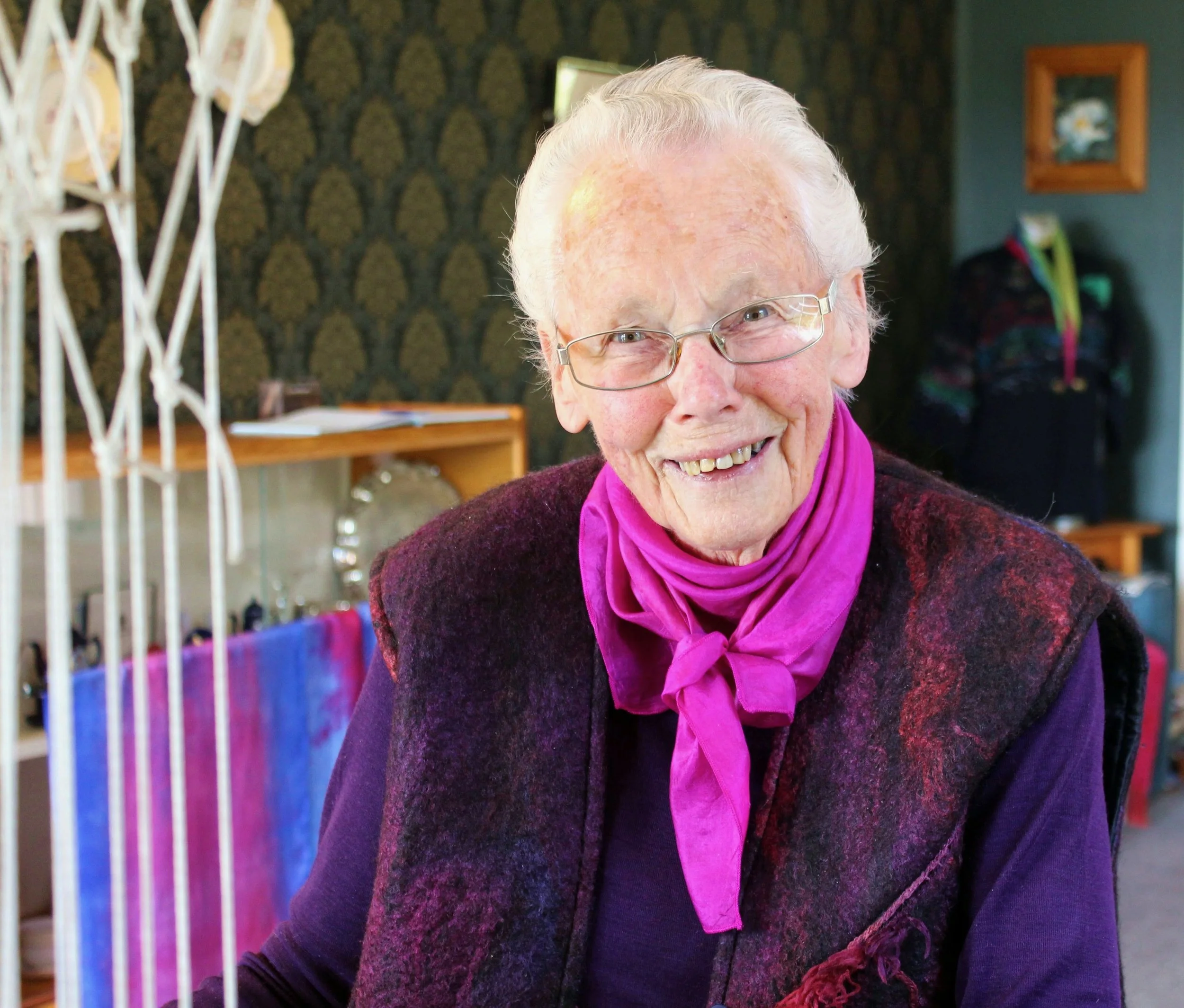
Accomplished weaver Esther Nitschke has died after 60 years of service to weaving. Photo / Judith Lacy
Esther Nitschke is being remembered as one of the country’s most influential weavers.
Nitschke died in the early hours on January 26 at the age of 89.
She was known for her dedication to weaving, which she spent more than 60 years creating and teaching about to thousands of people.
In 1994, she was made a Member of the Order of the British Empire (MBE) for services to weaving.
Nitschke was born in Taihape but moved 13 times in her early years, including to Mangaweka, Marton and Whanganui.
In Whanganui, aged 16, she began training as a bespoke tailor with Clapham Brothers Tailors.
In 1963, she learned to spin with the help of Bridget Smeeton before beginning to weave, after her husband, Bruce Nitschke, built her a loom.
In 1974, she started a residential weaving school on the family farm in Marton.
Nitschke was a founding member of the Marton Arts and Crafts Centre, Marton Spinners and the Palmerston North Spinners and Weavers Guild.
Nitschke’s eldest child, Sandra Hall, said she and her two other siblings were brought up with a farming father and weaving-obsessed mother.
“There was no other life except weaving ... she brought us kids up to appreciate craftsmanship,” Hall said.
“She was very consumed in her work, but she did care [about us].”
Hall said her mother often praised Bruce for his support.
“He allowed her the freedom to weave, mum often said that ‘dad allowed me the space to weave, not a lot of husbands allow their wife to be so obsessive’,” Hall said.
Hall’s daughter Stephanie Hall, in Perth, also weaves, after learning from Nitschke.
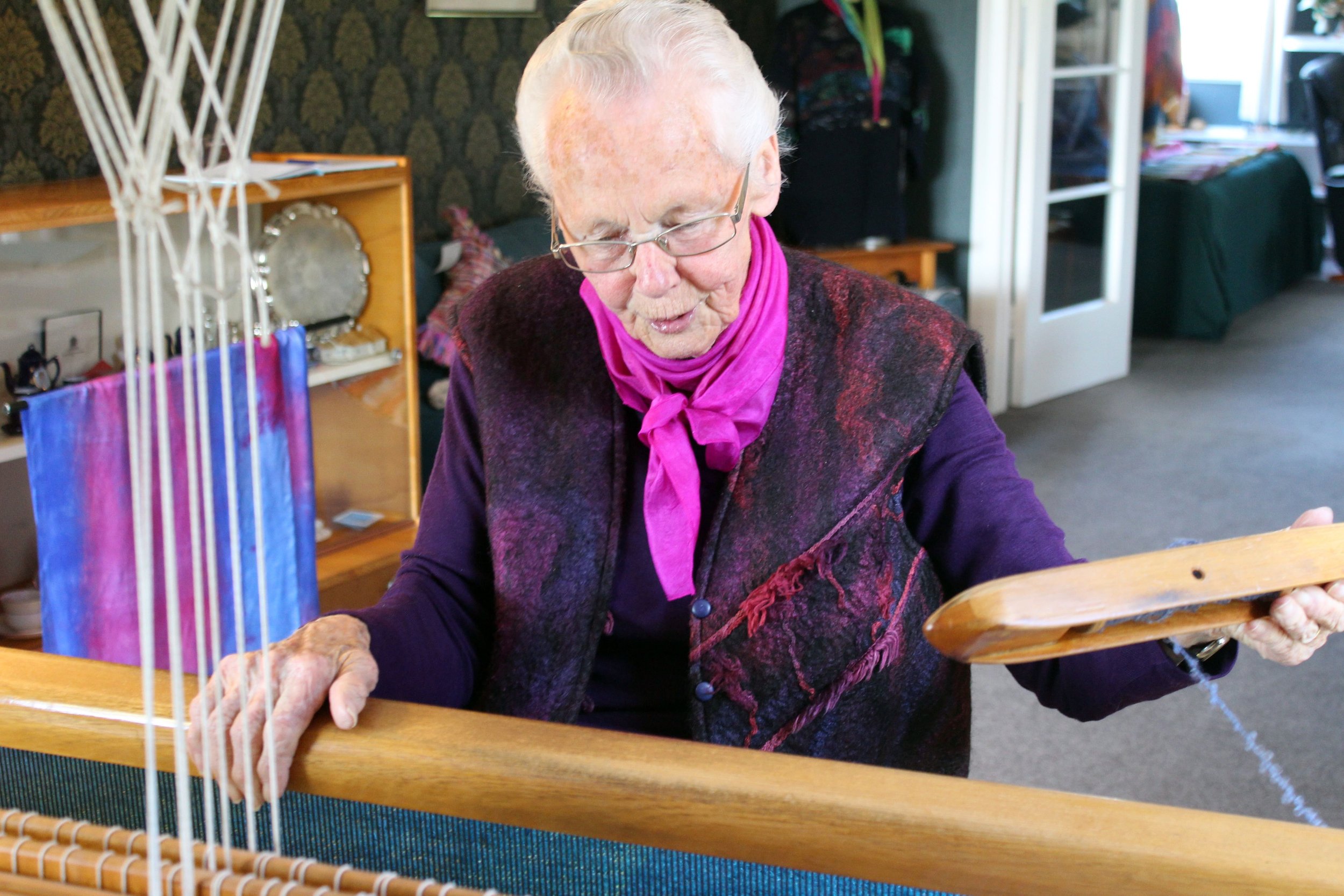
Esther Nitschke taught weaving up until a week before her death, notching up more than 62 years of weaving. Photo / Judith Lacy
Hall said weaving took her mother around the world twice and was a self-sustaining way to live.
Nitschke had to physically stop weaving around six months ago, which Hall said was very hard for her.
“There were a few tears over not being able to weave any more, but ... we all went and let her talk about it because that was her reliving,” Hall said.
Nitschke continued to teach weaving up until a week before her death.
One of her students, Manawatū artist Natasha Christensen of Slow Woven Textile Studio, described Nitschke as a master weaver and mentor.
“She was so extraordinary and had such wisdom, skill and knowledge of weaving, but also she was also very patient and kind,” Christensen said.
“She couldn’t do enough to help anybody who interested in weaving – it was just her greatest passion, it was just all that she did.”
The pair met each other in 2020 and had spent the past six years teaching and learning, respectively.
Christensen spoke at Nitschke’s funeral and said it was “beautiful” to reflect on the ways she had helped people.
“She has always been so happy to offer advice; she was so generous with her time when supporting people on their weaving journey,” she said.
Christensen praised Nitschke’s ability to adapt over the years to help people, referencing the shift from writing letters to receiving calls, emails and Facebook messages.
“I think that is such a beautiful example of her legacy and how much she was willing to change to be able to give people the advice they needed,” Christensen said.
Three of Nitschke’s garments are held in the Te Papa collection.
Christensen said Nitschke’s work also travelled worldwide.
She said that pieces of her work were given to the Duke and Duchess of Gloucester, Lady Norma Beattie and people in the United States and Britain.
Hall said it was a “very proud moment” for Nitschke and the family when she was made an MBE.
“She kept that a secret from everybody until it was announced,” Hall said.
“She wanted to wear the best outfit to the investiture because she was so proud to get the MBE – it was a big day.
“She wove her own fabric, spun the silk to do the weaving and made up an outfit.”
The original article can be found in the Whanganui Chronicle here.