Felt | Warp, weft, and crazy alchemy: Behind the scenes of Slow Woven Textile Studio
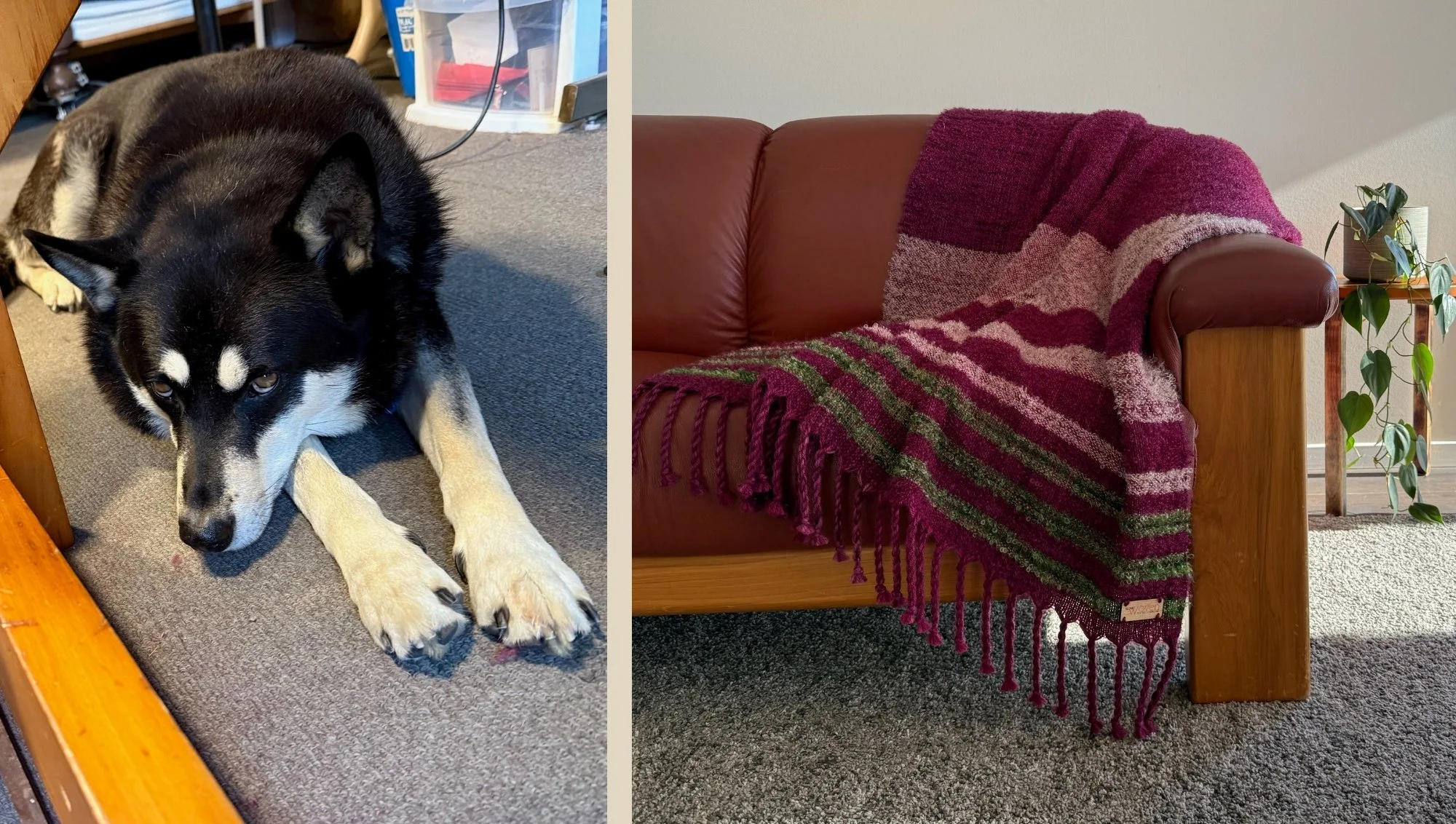
In her rural Manawatū-based workshop, Slow Woven Textile Studio, weaver and fibre artist Natasha Christensen works with natural fibres to create her stunning throws, hand-dyeing yarn in vibrant colours inspired by the native plant life of Aotearoa. Supervised by Hudson the husky, she spends her days winding the yarn, warping the loom, and weaving the weft of beautiful textiles that are as much art as cosy soft furnishings.
What do you make?
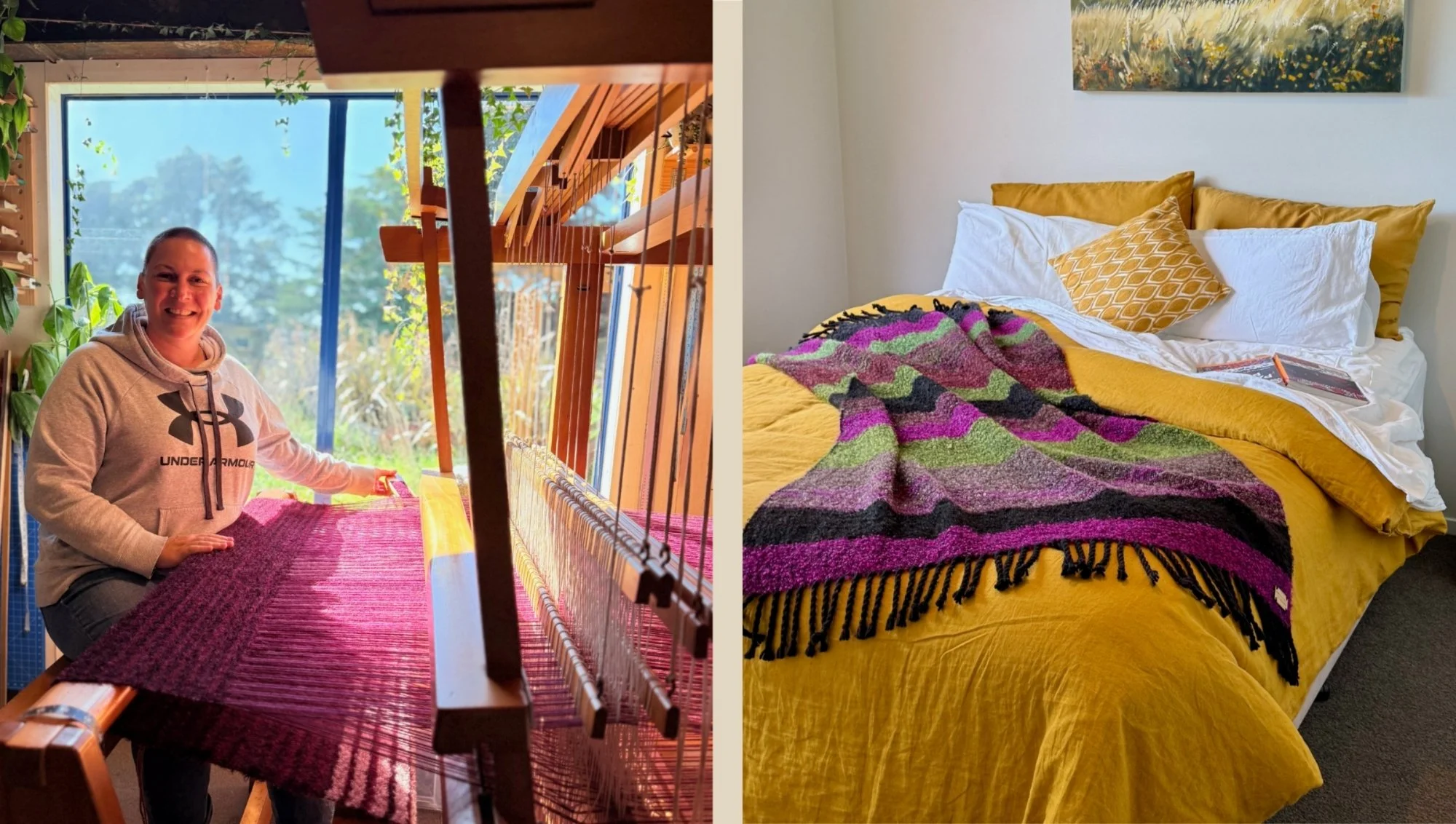
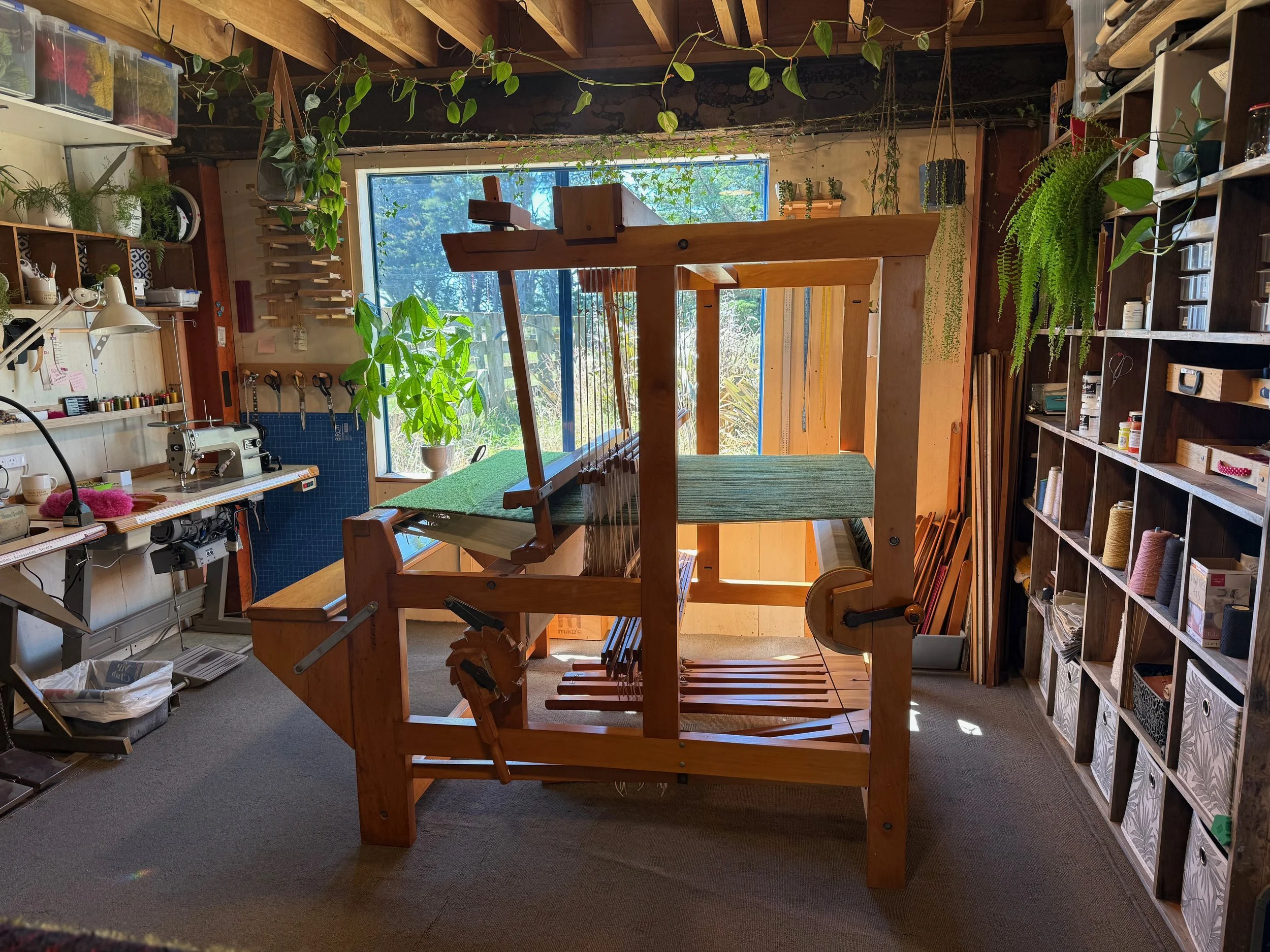
I‘m a Manawatū-based weaver and fibre artist who works with only natural and sustainable fibres. I work from my studio where I weave on a beautiful handmade kauri loom that was built in 1978 and was kindly gifted to me. My work is as much art as it is practical – you might see one of my throw-blankets hanging in a gallery but equally you might find it thrown over the arm of a favourite chair, ready to be wrapped around the shoulders of its owner on a chilly night.
How did you get into your craft?
I started weaving out of necessity. I hadn’t worked for many years due to a serious health condition, but thought that if I could make some items to sell online, on websites such as Felt, then it would give me the ability to work on my own terms. I could be in the studio when I felt well enough and head back to the house when I needed a nap. It meant that I could work at my own pace with no pressure or expectation from others. I started with a plan to make a range of sustainable handbags, but was having trouble finding the right fabric for the project. I have a dear friend in master weaver Esther Nitschke (MBE), and it was over lunch one day that we were discussing the dilemma of the cost and complications of buying wholesale fabric from overseas.
As we chatted back and forth, I happened to look down at the beautiful hand-woven dress that Esther was wearing and it suddenly occurred to me that I could learn to weave and make the fabric myself! Esther just happened to be holding a beginner’s weaving class the very next weekend, so the timing was perfect.
At first, weaving was a means to an end. I wanted to weave just enough fabric to make my collection of sustainable bags and then I assumed I would put my small table-loom aside and carry on with other things. One day Esther said to me knowingly “You’ll be dyeing and weaving wool next.” I laughed and brushed it off, thinking to myself that it didn’t really seem like ‘my thing’. In actual fact, it turned out to be exactly my thing! Less than two years later I was not only dyeing and weaving wool on a huge kauri floor loom, but I was also holding my first weaving exhibition!
Do you have formal training or qualifications in your craft?
I studied Fashion and Textile Design way back in the early ’90s and worked as a dressmaker and designer, so I have some skills from that period of my life – design, pattern drafting, sewing, and so on.
Esther, my weaving mentor, has been training weavers for over 60 years and although she doesn’t officially teach anymore, I am very fortunate that she continues to tutor and guide me in a myriad of different ways. I’ve had lessons from her over the phone and by email, she’s visited me in my studio countless times to offer assistance and direction, and I have spent many hours in her home – either learning informally as we chat over a cup of tea, or in a more structured way where she guides me through a curriculum of weaving classes.
Tell us about some of the techniques involved in producing one of your pieces
Most of my work is inspired by New Zealand’s native plant life, so I always start with a photo and a rough idea of what I want to capture colour-wise. It might be the flower of the plant, the bark and foliage, or it could even be part of the plant that has died and dried off, creating a beautiful tonal palette of moody browns.
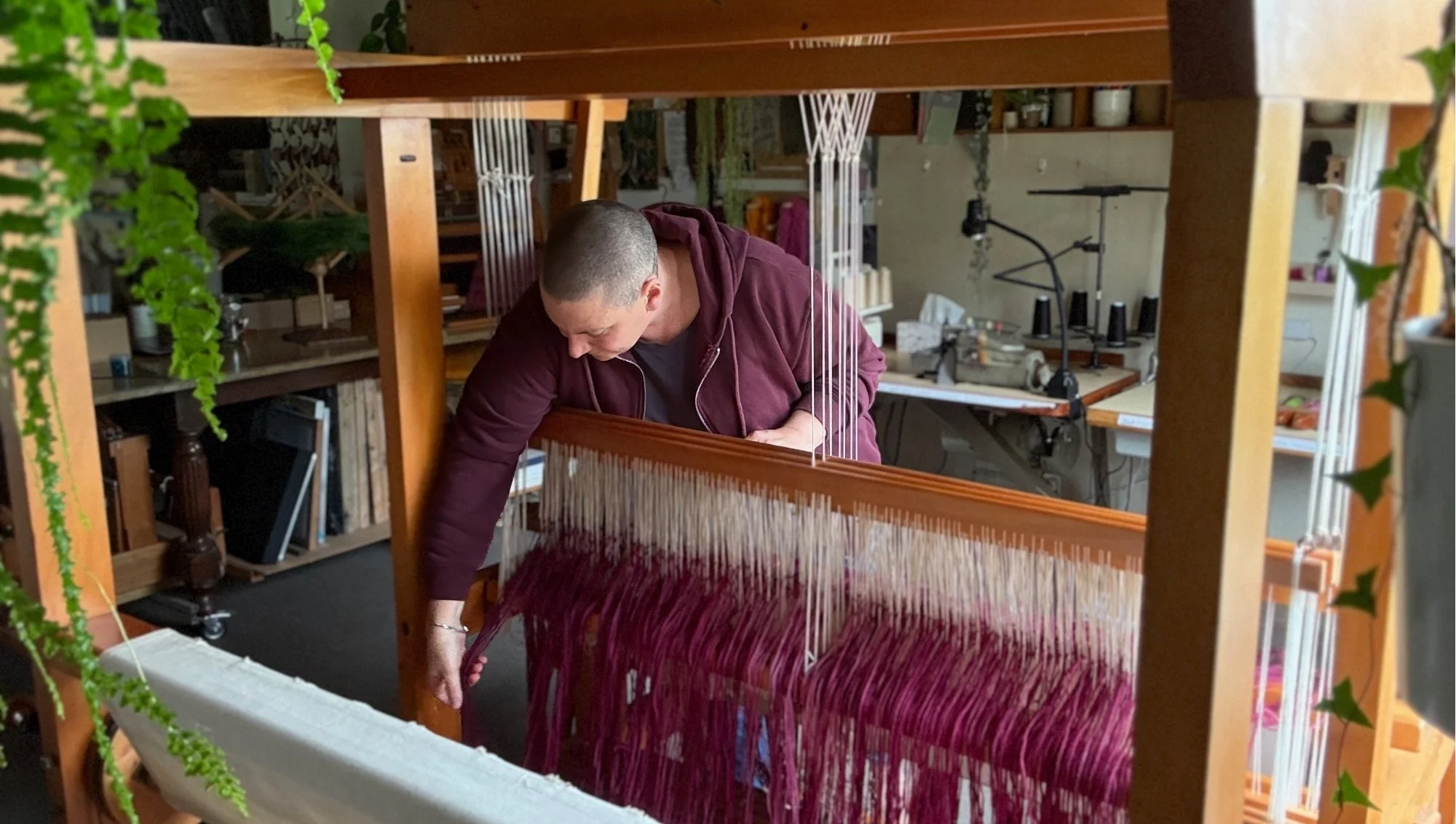
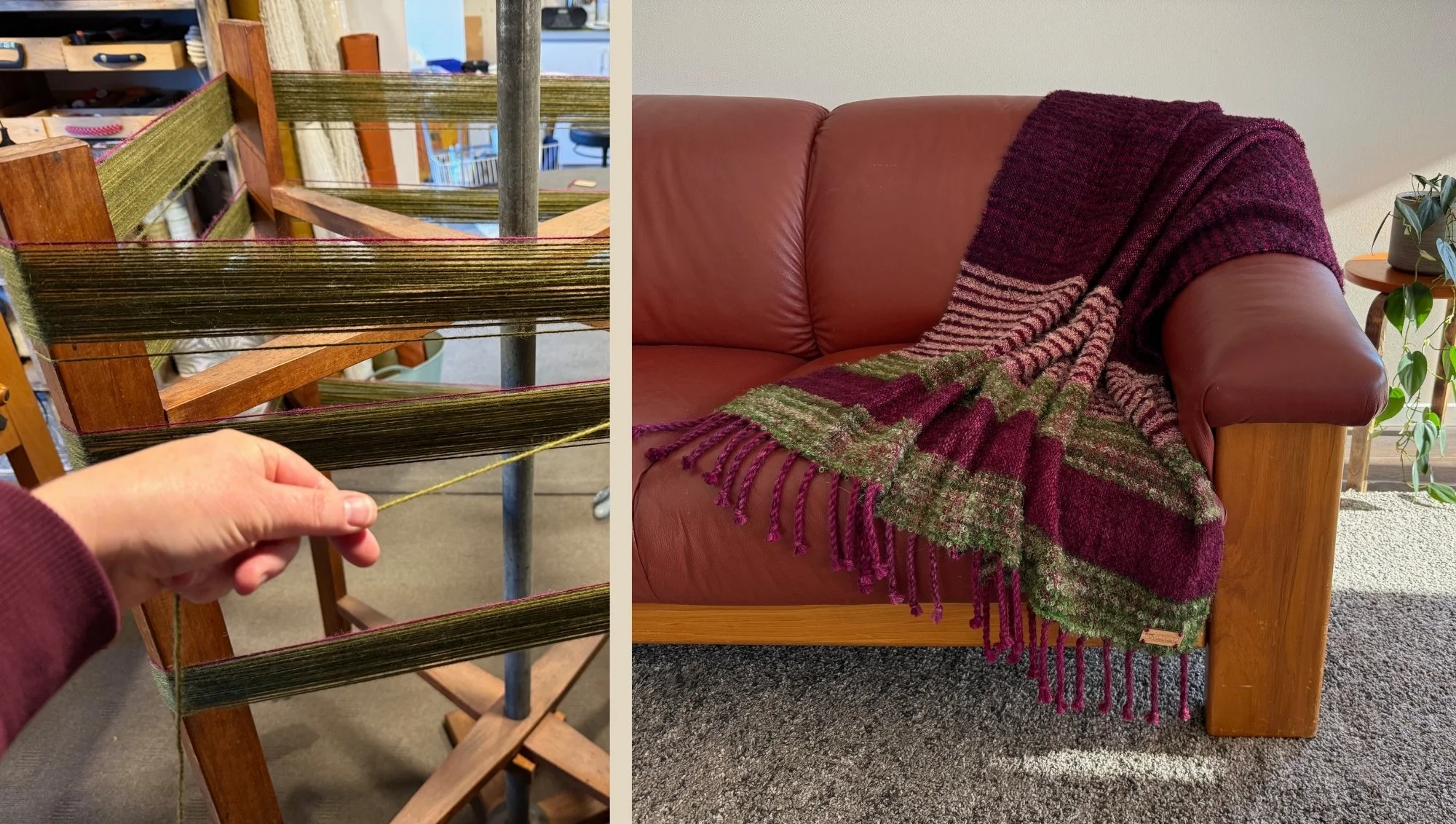
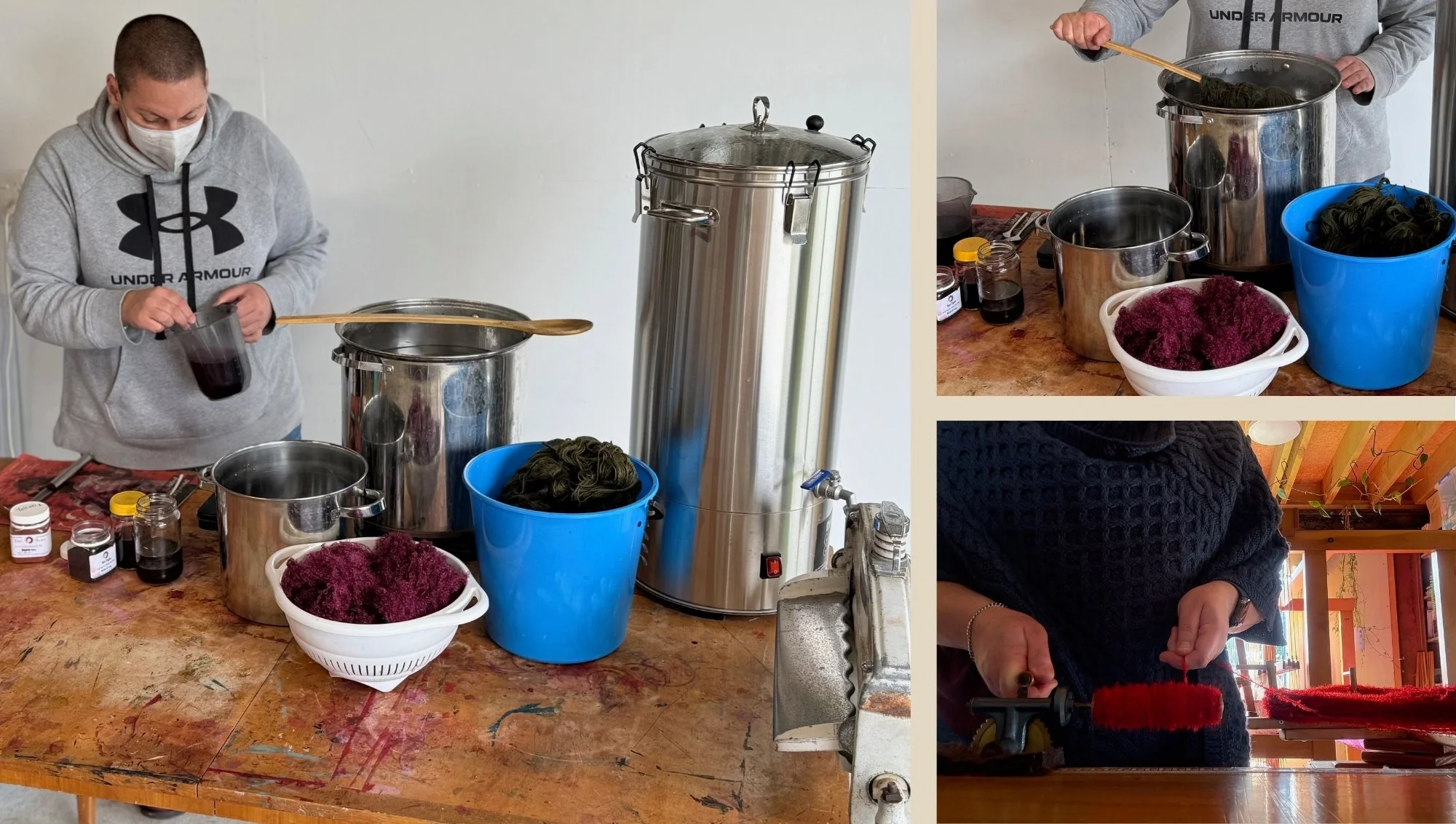
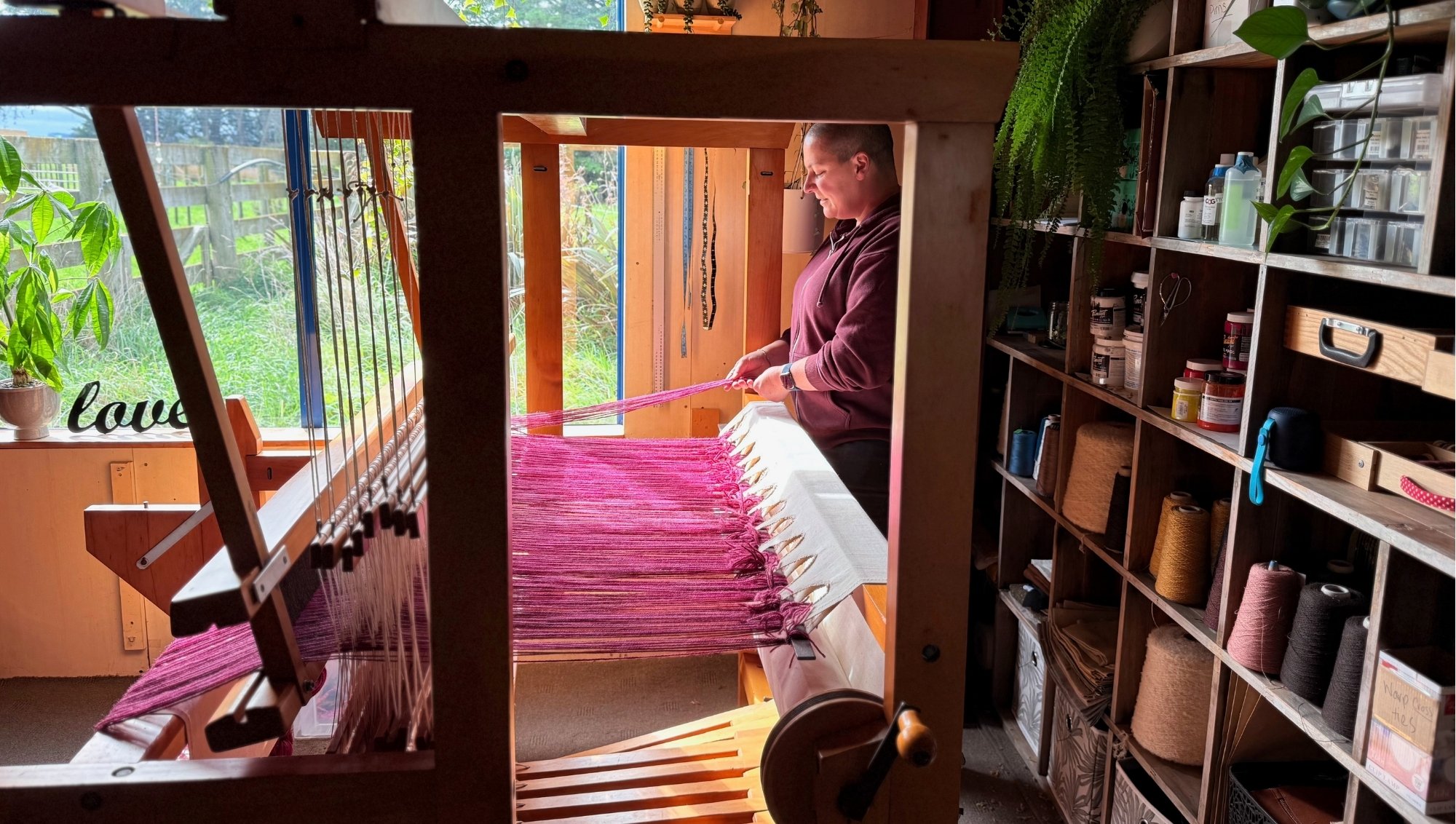
I buy New Zealand yarn direct from the mill and dye it myself. It arrives on cones in its natural colour and then I wind it into large hanks. Each hank is dyed by hand and then either measured out in preparation for being threaded onto the loom for the warp (vertical threads) or wound onto a bobbin, placed in a shuttle, and woven as the weft (horizontal threads).
Preparing the loom is a big job, so I measure out enough yarn to make at least three items using the same warp. That’s over 2200 metres of wool that I’m threading through the loom. It’s a time-consuming process and it’s very easy to get in a pickle with that much yarn. I find the best way is to sit down and do it quietly and mindfully. Being patient and not rushing actually makes the process much faster.
The weaving itself is probably the most straightforward part. I start with a plan but sometimes this changes as I see how the colours work together. The fun part is that your work is wound onto a front roller as you weave, so you don’t really know what it’s going to look like until you’re finished. It’s usually a lovely surprise when you cut the piece of weaving off the loom and lay it out in front of you, seeing it in its entirety for the first time. There’s a delightful sense of “oh wow, I made that!”
There is still some work to be done – the fringes need to be finished, either twisted or knotted. This is the boring bit of the process so I usually do this in the evening, curled up in a chair listening to a podcast. Finally, the blanket is wet finished, dried and then I add one of my cute wooden labels. Job done.
Your favourite materials, tools and processes?
My favourite part of the process is dyeing the yarn. In many ways the actual weaving of an item is very structured – there’s a lot of math and it’s all about getting the numbers correct. In contrast, I love the freedom that I have with dyeing wool. Some people work with percentages when they mix dye colours and keep precise notes and recipes, but that’s not my style. I’m much more of a crazy alchemist at the dye station – I love just going with my instincts and throwing colours in the dye pot. Usually there is a bit of tweaking but more often than not I get it pretty spot on. Thankfully I’ve only had a few failures that were so awful my only option was to over-dye them with black.
Actually, one of my biggest mistakes turned into an award-winning piece of art. I was aiming for a particular shade of orange one day, but when it came out of the dye pot it was what you could only call ‘road-cone orange’. It was very bright, but even though it wasn’t right for the project I was working on at the time, I did have future plans to weave a throw-blanket inspired by harakeke, our native flax, and the shade of orange reminded me of the pollen inside the flax flowers when they bloom. I let the wool dry and then put it back in the dye pot for another go. I over-dyed it with mottled reds and browns but left just a touch of the orange peeking through. The red over the orange base turned out so beautiful and rich and the browns were deep and luxurious. Combined with the pops of orange the colours captured the harakeke in bloom perfectly.
I wove it with a stripe running through the warp threads to represent the central rib of the long fibrous flax leaves and once the piece was finished, I knew I had created something truly special. I entered it into some national art awards and the rest is history.
What has been a highlight of your maker journey so far?
I’ve just had a really successful exhibition in the Manawatū. I sold nearly everything and brought a huge number of new visitors to the gallery. I didn’t hold an opening (not my style) but instead was at the gallery on Sundays to give demonstrations, meet people, and talk about my work to those who dropped in. I loved connecting with people in this way and really enjoyed seeing the way they responded to my work.
Describe your workspace:
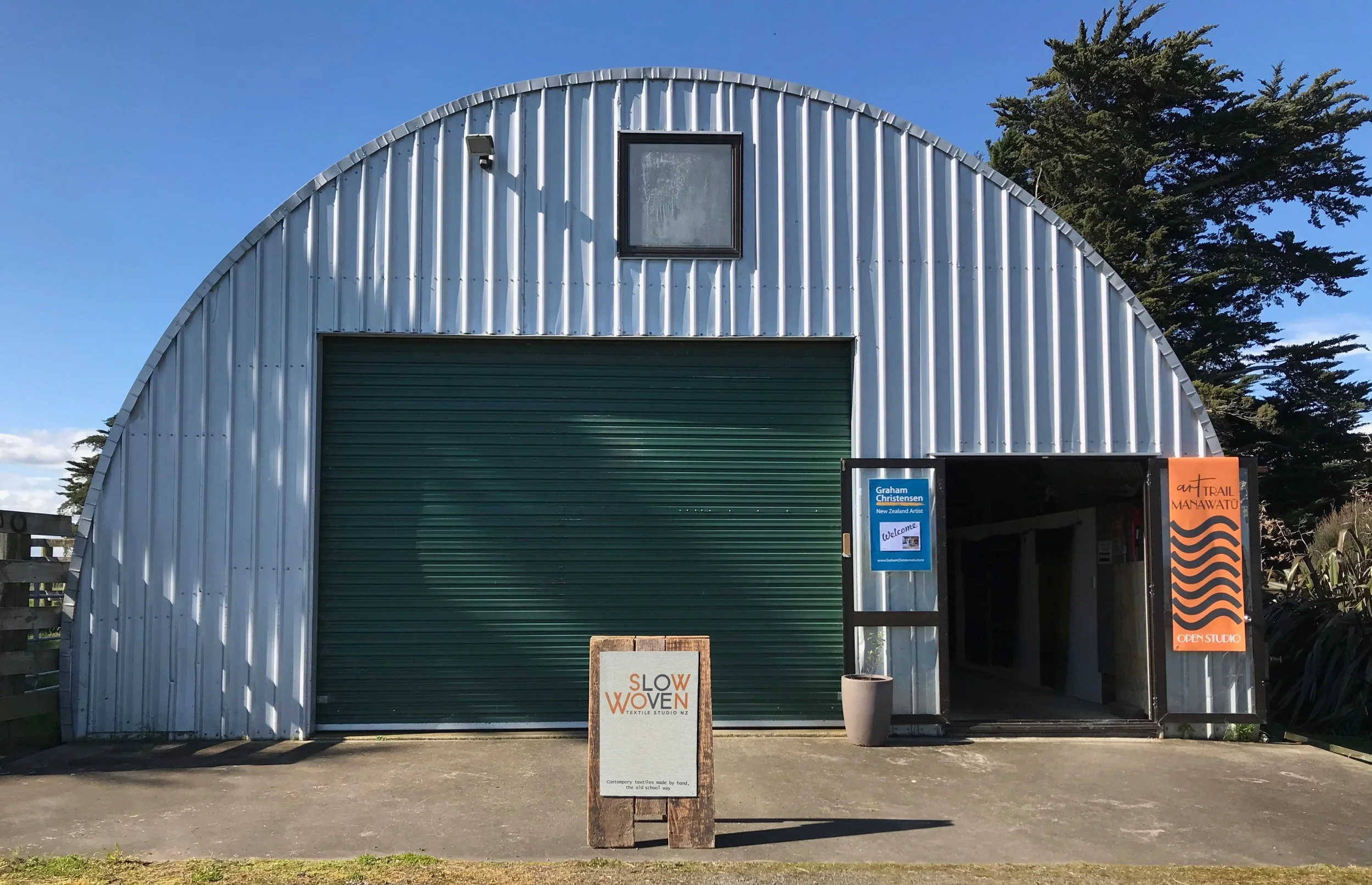
I currently share a studio with my father, rural artist Graham Christensen. It’s a large room at the back of the barn on my parent’s farm in the Manawatū. My floor loom sits next to a big window which provides plenty of natural light and a view of the sheep in the paddock next door. I have a dye station in the barn itself where I have lots of space and I can make a mess without having to worry about leaving stains on the kitchen benchtop.
Your favourite feedback from a customer:
A beautiful lady walked in the door of the gallery where I was holding my recent exhibition. She stopped still for a few moments and then turned to me and said she could feel the mana in my work. I make each piece with such care, thought, and love that I’ve always hoped that somehow people can feel it.
What are you reading now?
The New Eight Steps to Happiness – the Buddhist Way of Loving Kindness by Geshe Kelsang Gyatso. I first read this book 24 years ago just as I was dealing with a difficult relationship break-up. It helped me to turn the pain I was experiencing on its head and completely transform the situation into one of genuine peace and joy. I have read it many times since and each time I am stopped in my tracks by this timeless wisdom.
A favourite quote:
‘May I become a protector for the protectorless, a guide for those who travel on the road, and, for those who wish to cross the water, may I become a boat, a ship, or a bridge.’ Shantideva, Guide to the Bodhisattvas Way of Life. So beautiful right?!
Tell us about your pets:
I have a husky called Hudson who was a rescue. He came to me very unstable and aggressive and I initially thought that I would have to rehome him as his behaviour was way more than I could manage. I took him to a professional dog trainer to be assessed and was told that I was probably Hudson’s last chance and that if I rehomed him, it was likely he’d end up being put down. I accepted the challenge and through a lot of work, patience, and love he has become the most beautiful, loyal dog you could imagine. He always joins me in the studio – although he is usually sprawled out on the floor, fast asleep and in the way!
What would your advice be for those starting out in a crafty business?
Know that at first you will make mistakes – and plan for them. Whenever I try a new technique or make a new design, I always allow for the first one to be a disaster. It’s a lovely way to be as it helps me to feel free to just give it a go and not worry about it being perfect.
Why do you think it’s important to buy handmade and/or locally made goods?
When I buy handmade, I always feel like the piece carries a little of its maker with it. I have a blanket that a friend made and whenever I wrap it around me it feels like she is wrapping me in her arms and giving me the biggest hug.
What was the last handmade item you bought and what attracted you to it?
I bought the cutest heirloom linen bunny from the Felt store Made by Analesha. It was for my four year-old niece for Christmas, but seriously, I very nearly kept it for myself. It was beautifully made and so original and gorgeous. It arrived wrapped preciously in tissue and tied with a piece of lace and dried flowers. Just perfection.
What’s your favourite item in your shop right now?
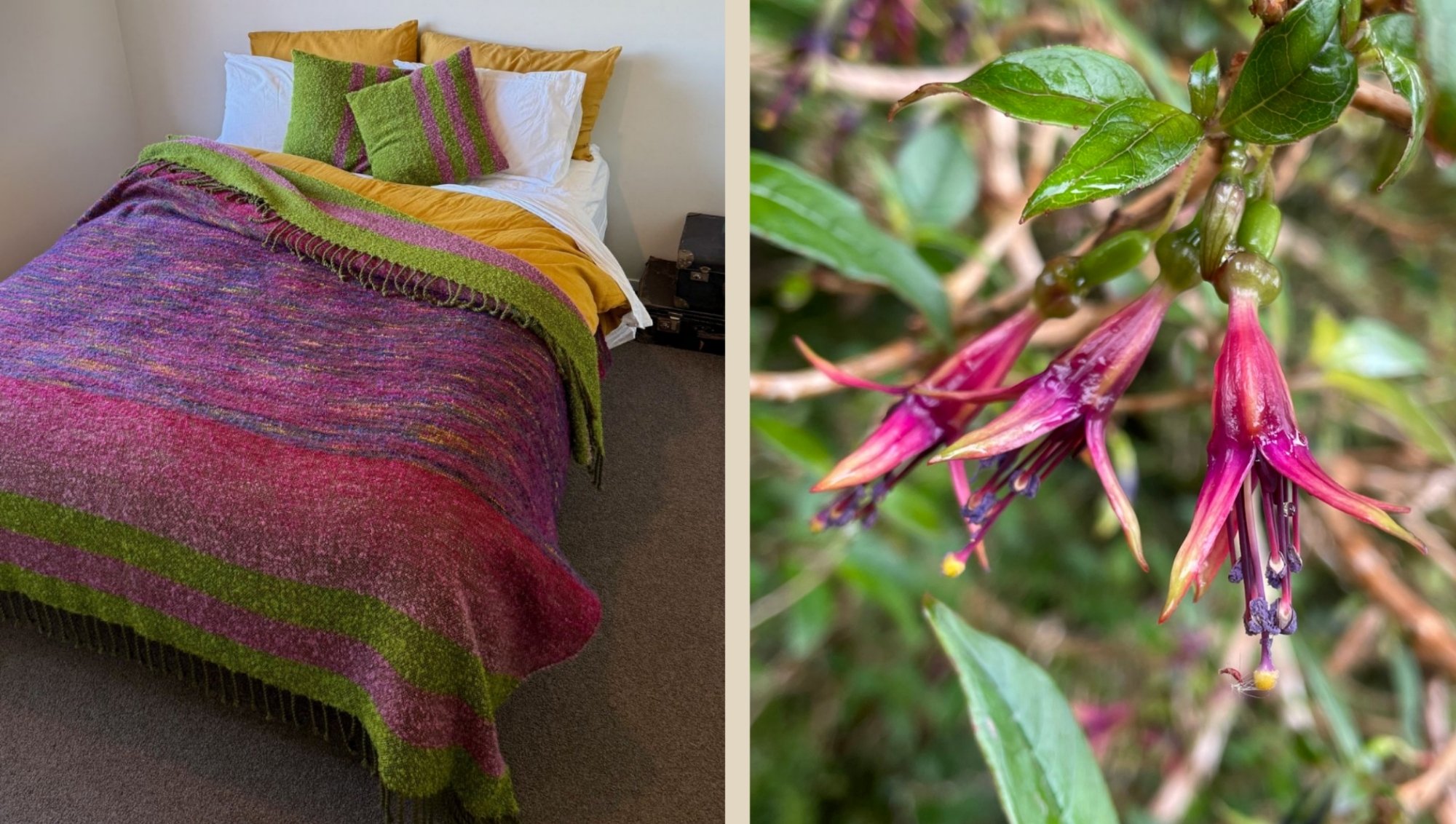
It has to be the wool and mohair Flowering Kōtukutuku Blanket. It’s such a fun colour-way that truly captures the beauty of our native tree fuchsia. It’s is so luxuriously soft and warm – I wish there was a function where you could somehow reach into your computer screen and feel how deliciously snuggly it is!
What’s in store for the rest of 2025?
I hope to move this year! I’m looking for a new home for myself, Hudson, two rabbits, and the studio. I’m not sure where or what type of property it might be at this stage, but I’d love to rent somewhere interesting or quirky where I could open the studio to the public a day or two a week.
Later in the year I’ll be holding a beginner’s weaving workshop, the dates are yet to be confirmed but it’s likely to be November, and in 2026 I’ll be holding regular workshops throughout the year, so if you are keen to learn to weave or extend your weaving skills, stay tuned!
The original post can be found on the Felt website here.